Table of Contents
ToggleHogwarts Legacy throws you into a wizarding world teeming with magical creatures, some majestic, some terrifying, and a few downright dangerous. Whether you’re tracking down a Thestral for your collection, dodging a troll in the Highlands, or strategically deploying a beast in combat, understanding what’s lurking in the magical world is crucial. This guide covers every beast you’ll encounter, from common critters to legendary rarities, so you can approach your adventure with confidence and know exactly what you’re up against (or trying to befriend).
Key Takeaways
- All beasts in Hogwarts Legacy fall into distinct categories—combat threats, peaceful collectibles, environmental creatures, and legendary rarities—each requiring different tactical approaches and preparation strategies.
- Dangerous beasts like Trolls, Spiders, and Graphorns demand specific spell selections and positioning; using fire-based spells against spiders and ranged tactics against slow but powerful trolls significantly improves survival rates.
- Capturing and breeding beasts in your vivarium is optional but unlocks unique cosmetic rewards, stat bonuses, and memorable endgame content that deepens engagement with the magical world.
- Legendary beasts such as the Thunderbird, Hungarian Horntail, and Occamy represent rare endgame achievements that spawn under specific conditions and provide hours of rewarding exploration and collection challenges.
- Understanding beast locations and behavior patterns serves as both a navigation aid and strategic tool—knowing which creatures inhabit an area helps you prepare appropriate spells and plan exploration routes effectively.
Understanding Beasts in Hogwarts Legacy
What Are Beasts and How They Fit Into Gameplay
Beasts in Hogwarts Legacy aren’t just window dressing, they’re a core part of the game’s ecosystem. These creatures range from simple ambient animals to complex boss encounters that test your combat skills. Understanding how beasts function in the game helps you navigate encounters more effectively and opens up new gameplay possibilities.
Beasts serve multiple purposes in your journey. Some are purely environmental: you’ll spot them grazing peacefully and gain nothing by engaging with them. Others are essential to quests or side missions, requiring specific knowledge to locate or defeat. A third category consists of combat-focused creatures that actively hunt or defend territory, making them genuine threats if you’re unprepared.
The beast system also ties into the broader exploration and collection mechanics. As you progress, you’ll unlock the ability to care for creatures in your vivarium, a sanctuary where you can breed, study, and interact with beasts you’ve captured. This isn’t mandatory for completing the game, but it opens up unique cosmetic rewards and deepens your connection to the magical world. Understanding beast types helps you decide which creatures are worth tracking down and which you can safely ignore on your adventure.
Beast Types and Classifications
Hogwarts Legacy categorizes beasts into several distinct types, each with different behaviors, habitats, and threat levels. Recognizing these categories helps you prepare appropriately before heading into unknown territory.
Magical Beasts form the main category and include everything from Hippogriffs to Graphorns. These are the creatures you’ll spend most of your time interacting with. Magical beasts can be further subdivided by their temperament: passive creatures that ignore you, skittish ones that flee on approach, and aggressive ones that actively seek combat.
Companion Creatures are beasts you can capture and care for in your vivarium. Not all magical beasts fall into this category, some are too dangerous or story-locked to keep. The creatures you can care for often have specific capture requirements, sometimes involving potions, spells, or specialized tactics.
Legendary Beasts represent the rarest and most powerful creatures in the game. These typically appear in specific locations or under particular conditions and often serve as memorable encounters rather than repeatable farm spots. Legendary beasts generally have unique appearances, enhanced abilities, and special loot tables.
Environmental Creatures are purely atmospheric, deer, owls, fish, and other animals that populate the world. Interacting with them typically yields nothing mechanically, though keen-eyed players might spot them during exploration challenges. These creatures add authenticity to the magical world without being threat vectors.
Each type requires different approaches. A Hippogriff demands respect but can become a loyal creature in your vivarium. A rogue troll, meanwhile, exists only to be avoided or defeated. Understanding which category a beast falls into tells you how to approach the encounter.
Magical Beasts and Where to Find Them
Dangerous Combat Beasts
Combat-focused beasts represent the greatest threat to your survival and the most rewarding encounters. These creatures actively hunt, defend territory, or guard valuable resources, making them the reason you’ll spend time brewing Baruffio’s Brain Elixir and sharpening your spells.
Trolls are among the earliest dangerous beasts you’ll encounter. These massive humanoid creatures inhabit caves and overgrown areas throughout the map. A troll carries a club or massive weapon and hits hard, one strike from a troll can deplete a significant chunk of your health bar. Where to find a troll in Hogwarts Legacy typically points you toward Where to Find a, which outlines their territories and strategies for taking them down safely. Trolls are slow but persistent, so kiting around them while casting ranged damage spells like Diffindo or Confringo works well.
Spiders are another major threat, particularly in darker areas. Giant spiders deal poison damage and come in swarms, forcing you to manage multiple threats simultaneously. A single spider is manageable, but cornering yourself with three can spell disaster. Hogwarts Legacy Spiders: Conquer covers specific spider encounters and effective counter-strategies. Fire-based spells work particularly well against these creatures.
Graphorns are heavily armored creatures with spike-covered hides. These beasts hit hard and take punishment, requiring either sustained DPS or tactical spell selection. Graphorns guard valuable areas and often appear in groups, demanding careful positioning and crowd control.
Dementors represent a unique threat, creatures of pure darkness that drain your stamina and inflict a damage-over-time effect. These enemies require specific spell interactions and can’t be defeated through conventional combat tactics alone. Encountering a Dementor is genuinely unsettling and forces you to use knowledge rather than reflexes.
Acromantulas are boss-level spider variants that appear in late-game encounters. These massive arachnids combine speed, damage output, and poison effects into a genuine threat. Defeating an Acromantula feels like a genuine achievement and often drops unique loot.
Peaceful Creatures and Collectibles
Not every beast wants to kill you. Many creatures exist peacefully in the magical world, and some can be captured for your vivarium. These beasts tend to inhabit specific biomes and often have specific capture conditions.
Hippogriffs are among the most recognizable creatures in the game. These majestic creatures appear in open fields and respond to respectful approaches. You can’t capture a hippogriff through combat: instead, you must approach cautiously and interact positively. Once captured, a hippogriff becomes a long-term companion in your vivarium. Hogwarts Legacy Animals: Discover the Magical Creatures Transforming Your Adventure provides detailed information on capturing and caring for these creatures.
Thestrals are ghostly creatures visible only to those who’ve witnessed death. These winged horses appear in specific locations and can be captured for your collection. Thestrals have a haunting beauty and represent one of the more unique beasts available.
Nifflers are small, magical creatures attracted to shiny objects. These little thieves can be befriended and cared for, and they’re among the easier creatures to capture. Nifflers don’t pose combat threats and instead add charm to your vivarium.
Flobberworms are gentle, slow-moving creatures that pose no threat. Capturing one is straightforward, you’re more likely to miss them due to their slow movement than fail any actual mechanics. These creatures serve mainly as collection achievements.
Phoenix is a legendary passive creature that appears under specific conditions. Witnessing a phoenix in flight is visually stunning, and capturing one represents a significant achievement in the creature collection quest.
Legendary and Rare Beasts
How to Encounter Legendary Creatures
Legendary beasts represent the rarest encounters in Hogwarts Legacy. These creatures appear infrequently and often under specific conditions, making them genuinely memorable when you encounter them.
Graphorn Matriarch is a legendary variant of the standard graphorn. This creature is larger, more aggressive, and carries more health than regular graphorns. The Graphorn Matriarch typically guards a specific location and serves as a boss encounter in progression chains. Defeating it grants unique cosmetic rewards for your vivarium.
Thestral Alpha is a variant of the standard thestral with enhanced abilities and a distinct appearance. Finding and capturing an alpha variant requires persistence and often involves revisiting creature habitats during specific times or weather conditions.
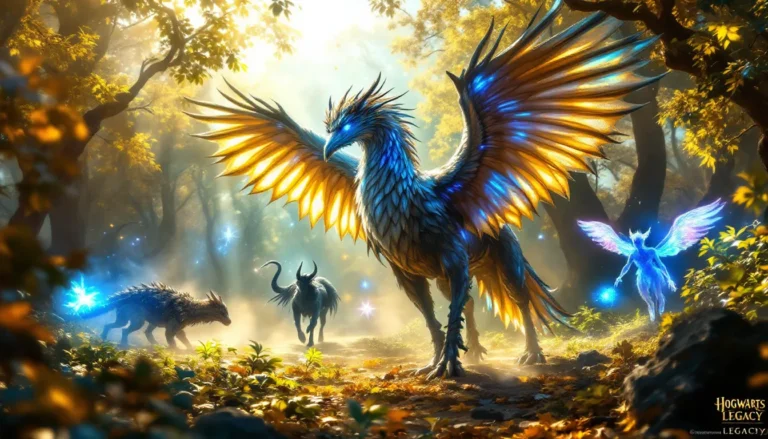
Thunderbird is one of the most visually striking legendary beasts. This massive bird creature is naturally rare and appears in limited numbers. A Thunderbird can be captured, making it a highly coveted vivarium resident. The effort required to locate and capture one makes this a true endgame achievement.
Hungarian Horntail represents dragon-class creatures in Hogwarts Legacy. This legendary dragon is dangerous in combat and visually impressive. Encountering a Horntail triggers a significant combat encounter that requires preparation, high-level gear, and tactical spell usage.
Occamy is a serpentine legendary creature that grows to enormous size under specific conditions. Capturing an Occamy and studying its growth cycle in your vivarium reveals unique mechanics unavailable with other creatures. This beast combines rarity with gameplay uniqueness, making it memorable beyond just combat difficulty.
Legendary beasts share common traits: they typically appear in high-level areas, often require specific conditions to spawn, and carry enhanced loot upon defeat. Many legendary beasts can be captured and added to your vivarium, though some are story-locked to prevent early power scaling. Tracking down all legendary variants provides dozens of hours of end-game content and represents a completionist’s true challenge.
Capturing and Caring for Beasts
Capturing creatures isn’t mandatory for progressing through Hogwarts Legacy, but it opens unique mechanics and deepens engagement with the world. Understanding the capture system helps you build the vivarium collection you want.
Capturing works differently depending on the beast type. Passive creatures like hippogriffs require a respectful approach, you walk slowly toward them, avoid sudden movements, and interact when the prompt appears. Aggressive creatures might require you to weaken them first through combat before using a specialized capture spell. Some creatures require specific conditions: a particular potion effect, time of day, or weather state.
Once captured, beasts go to your vivarium, a sanctuary space where you care for them, breed them (if conditions are met), and observe their behavior. Your vivarium starts small but expands as you progress, allowing you to house more creatures over time. Caring for vivarium residents involves feeding them, which typically uses ingredients you’ve gathered throughout exploration.
Beast Breeding and Combination
Breeding mechanics allow you to combine two beasts to create new variants or strengthen existing creatures. Not all beasts can breed, and breeding requirements vary significantly between species.
Breeding typically requires housing two compatible creatures in your vivarium simultaneously and waiting for specific conditions to trigger. Some pairings yield cosmetic variants, different color patterns or size variations of the same creature type. Other combinations might enhance stats or unlock behavioral variations.
The breeding system rewards experimentation and long-term engagement with your vivarium. Successful breeding often yields unique creatures that can’t be found in the wild, making them valuable collectibles. Planning your vivarium layout to help specific breeding combinations represents an endgame goal for engaged players.
Certain creatures possess special breeding properties, a rare beast might produce offspring with enhanced abilities or unique appearances. The Ultimate Hogwarts Gameplay Walkthrough covers vivarium optimization and breeding chains in detail.
Using Beasts in Battle and Exploration
Strategic Beast Selection for Different Encounters
While beasts themselves don’t fight alongside you in standard combat, understanding beast behavior and locations directly impacts your tactical approach to encounters. Knowing what creatures inhabit an area helps you prepare appropriately, if you know a region contains aggressive spiders, you’ll bring fire spells: if trolls live there, you’ll prioritize ranged damage and mobility.
Beast spawns also serve as navigation landmarks. Experienced players learn that finding certain creatures indicates you’re approaching specific quest areas or valuable loot zones. A cluster of thestrals might indicate a nearby treasure chest: troll presence often marks the entrance to a cave system worth exploring.
Certain quests specifically involve interacting with beasts. Some missions require you to find a particular creature type in a location, observe them without frightening them away, or even solve puzzles involving beast behavior. Knowing which beasts are passive versus aggressive helps you complete these objectives without unnecessary combat or failed approaches.
In exploration challenges like those detailed in Hogwarts Legacy Exploration Challenges: Unlock Secrets and Conquer Magical Quests, beast encounters often serve as optional elements you can engage with for rewards or bypass entirely. Strategic players use beast knowledge to decide which encounters merit pursuit based on their gear, spells, and current objectives.
The vivarium system indirectly impacts combat by allowing you to study creatures and unlock cosmetic rewards or lore entries. Some cosmetics provide passive bonuses to specific damage types, wearing a costume earned from a dragon encounter might increase your fire damage, for instance. Planning which creatures to capture and breed helps you optimize these bonuses over time.
Beast knowledge also enriches exploration. Knowing that a particular legendary beast spawns in a specific forest means you can plan expeditions around tracking it down. The hunt for rare beasts provides natural goals that extend gameplay beyond the main story, keeping you engaged in exploration long after credits roll.
Conclusion
Hogwarts Legacy’s beast system represents one of the game’s most immersive elements, whether you’re a completionist determined to capture every creature or someone who simply wants to survive encounters with dangerous wildlife. The magical world feels alive because of its creatures, from passive hippogriffs grazing in meadows to legendary dragons guarding territory.
Mastering beast knowledge doesn’t require memorizing every creature’s stats. Instead, focus on understanding beast categories and locations relevant to your playstyle. Casual players might engage primarily with combat encounters, learning to identify dangerous beasts and prepare accordingly. Completionists will spend hours tracking down legendary variants and optimizing their vivarium setup.
The best part? You can approach beasts but you want. Capture everything. Ignore creatures and focus solely on main quests. Hunt legendary variants. Breed ambitious creature combinations. Hogwarts Legacy’s beast system accommodates all these approaches, making them feel equally valid and rewarding. Whether you’re experiencing Hogwarts through combat, collection, or pure exploration, the beasts you encounter will shape your unique adventure through the wizarding world.