
League of Legends (LoL) captivates millions with its intricate gameplay mechanics that blend strategy, skill, and teamwork. Understanding these mechanics is crucial for players aiming to enhance their performance and enjoy the game to its fullest. From champion abilities to map awareness, each element plays a vital role in shaping the outcome of matches.
Players must master various aspects like last-hitting minions, positioning during team fights, and effective use of summoner spells. These mechanics not only define individual playstyles but also contribute to the overall dynamics of the game. As players delve deeper into LoL, they uncover layers of complexity that can make all the difference in high-stakes matches. Embracing these mechanics is the first step toward climbing the ranks and achieving gaming success.
Overview of LoL Gameplay Mechanics
League of Legends (LoL) gameplay mechanics encompass various components that significantly affect player performance. Mastering these elements enhances both competitive success and game enjoyment.
Champion Abilities
Champion abilities define play styles and strategic choices. Each champion features unique skills categorized into three types: passive, basic, and ultimate.
- Passive Abilities: These activate automatically and influence gameplay without player input.
- Basic Abilities: Players use these frequently, engaging opponents or aiding allies.
- Ultimate Abilities: Found in every champion, these powerful skills have longer cooldowns and can swing the match outcome.
Understanding these abilities allows players to maximize their champions’ potential during matches.
Map Awareness
Map awareness is vital for success in LoL. Players must constantly observe the minimap to track enemy positions, anticipate movements, and make informed decisions.
- Vision Control: Ward placement and denial reveal enemy locations and objectives, influencing team strategies.
- Objective Tracking: Monitoring objectives like dragons and Baron Nashor enables players to plan advantageous team fights.
Players enhancing their map awareness contribute to overall team strategy, enhancing winning chances.
Last-Hitting Minions
Last-hitting minions optimizes resource collection. Players must time their attacks to deliver the finishing blow to minions, ensuring they gain gold and experience points.
- Perfect Timing: Training precision facilitates consistent last-hitting, ensuring champions maintain gold income.
- Wave Management: Players manipulate minion waves to position themselves strategically for both offense and defense.
Mastering last-hitting directly impacts a champion’s early game viability and overall match success.
Positioning in Team Fights
Positioning plays a critical role during team fights. Players must assess their champions’ strengths and weaknesses during engagements, adapting accordingly.
- Frontline vs. Backline: Tanks should initiate fights while damage dealers remain behind, avoiding unnecessary risks.
- Escape Routes: Recognizing potential escape routes allows players to disengage successfully if fights turn unfavorable.
Effective positioning can determine the outcome of battles, making it essential for success.
Effective Use of Summoner Spells
Summoner spells can change the flow of gameplay. Players select two summoner spells unique to each champion before matches.
- Utility Spells: Options like Flash and Ignite offer critical utility and tactical advantages during engagements.
- Cooldown Management: Timing the use of summoner spells optimally can enhance survivability during crucial moments.
Effectively using summoner spells maximizes strategic execution throughout the game.
Champion Roles and Design
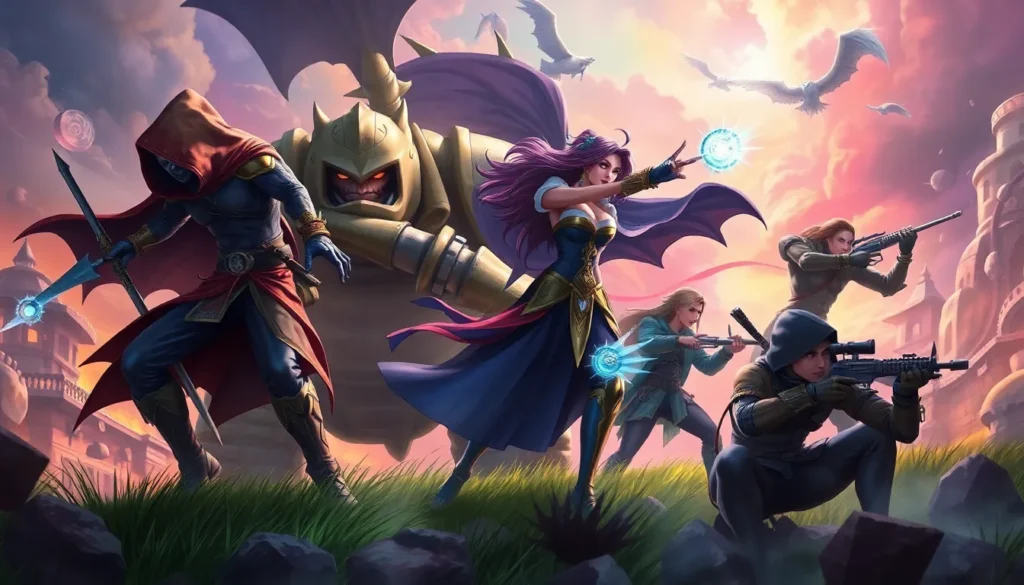
Champion roles in League of Legends (LoL) categorize champions based on their functional attributes and strategic impact within the game. Understanding these roles enhances gameplay and promotes efficient team compositions.
Types of Champions
- Assassins: Assassins excel at quickly eliminating high-value targets with burst damage. Champions like Zed and LeBlanc thrive on mobility and stealth.
- Fighters: Fighters combine offense and defense, often serving as frontline damage dealers. Champions like Renekton and Jax engage in sustained battles, balancing damage output with durability.
- Mages: Mages utilize magic damage and area control. Champions like Annie and Orianna deliver damage from afar, controlling team fights and zoning enemies.
- Marksmen: Marksmen, or AD carries, rely on sustained damage from basic attacks. Champions like Jhin and Miss Fortune excel in dealing consistent damage over time.
- Supports: Supports provide utility and protection for allies. Champions like Janna and Thresh enhance team survivability through crowd control and healing.
- Tanks: Tanks absorb damage and provide crowd control. Champions like Malphite and Leona engage enemies and protect allies, frontlining team fights.
Role-Specific Mechanics
- Assassin Mechanics: Assassins focus on burst damage and mobility. Efficient use of abilities can make a significant impact during skirmishes.
- Fighter Mechanics: Fighters benefit from sustaining damage and engaging opponents. Their abilities often include healing and shielding effects, enhancing survivability.
- Mage Mechanics: Mages utilize skill shots and area-of-effect abilities. Positioning is key for maximizing damage while minimizing exposure to enemies.
- Marksman Mechanics: Marksmen prioritize positioning in skirmishes. Farming effectively and maintaining distance in fights are critical for maximizing output.
- Support Mechanics: Supports employ crowd control and healing to influence outcomes. Effective ward placement provides crucial map awareness, aiding in objective control.
- Tank Mechanics: Tanks control the battlefield through crowd control and damage mitigation. Proper use of abilities can disrupt enemy formations and create openings for allies.
Game Phases and Objectives
Game phases in League of Legends (LoL) consist of early, mid, and late stages, each with distinct objectives and strategies. Understanding these phases enhances gameplay effectiveness and decision-making.
Early Game Strategies
Early game strategies focus on establishing a strong foundation. Players prioritize last-hitting minions to maximize gold gain. They should secure lane control by applying pressure on opponents. Establishing early vision is essential to prevent ganks, so placing wards in key locations aids in maintaining awareness. Taking down enemy turrets provides valuable map control. Coordinating with junglers for early objectives like Dragon or Rift Herald can grant additional advantages.
Mid-Game Dynamics
Mid-game dynamics revolve around team cohesion and map objectives. Players should focus on grouping with teammates to capitalize on power spikes. Targeting towers and neutral objectives is critical for extending leads. Securing vision control in contested areas, such as the Baron pit, facilitates strategic gameplay. Players need to communicate effectively to engage in skirmishes, as winning these encounters can shift the momentum. Maintaining effective rotations helps in leveraging superior positioning and map pressure.
Late Game Considerations
Late game considerations emphasize team fights and objective control. Players must prioritize positioning, as clustered champions can lead to decisive engagements. Coordinating ultimates and summoner spells can determine fight outcomes. Players should consistently track objectives like Baron and Elder Dragon, as these can significantly impact victory chances. Effective communication and strategic decision-making, such as when to engage or disengage, define success in this phase. Ultimately, executing planned strategies leads to victory.
Map and Vision Mechanics
Map and vision mechanics are critical components that significantly influence gameplay in League of Legends. Mastering these elements enhances strategic decision-making, promotes better positioning, and contributes to overall team success.
Importance of Map Awareness
Map awareness is essential for anticipating enemy movements and executing strategic plays. Players must continuously monitor the minimap for vital information, such as enemy positions, available objectives, and areas lacking vision. Recognizing when opponents are missing allows players to make informed decisions regarding aggression or caution. A heightened sense of map awareness leads to improved communication with teammates, resulting in coordinated efforts to secure objectives and avoid ambushes.
Ward Placement Strategies
Effective ward placement is crucial for maximizing vision control on the map. Here are key strategies for optimal warding:
- River Wards: Place wards in river bushes to track enemy junglers and prevent ganks during laning phases. This positioning provides advanced warning of incoming threats.
- Objectives Wards: Prioritize wards around critical objectives, such as Dragon and Baron. Controlling vision in these areas allows teams to contest or secure these objectives with confidence.
- Lane Wards: Utilize control wards in high-traffic areas of lanes to reveal enemy champions and discourage aggressive plays.
- Jungle Wards: Invest in wards within the enemy jungle to gather intelligence on their movements, giving teams an advantage in planning counterplays and securing objectives.
Combining these strategies effectively increases overall map control, offering greater opportunities for initiating fights and avoiding enemy confrontations.
Combat Mechanics
Combat mechanics in League of Legends (LoL) play a crucial role in determining the outcomes of skirmishes and team fights. Understanding the nuances of auto-attacks and abilities, along with the impact of crowd control effects, significantly enhances gameplay effectiveness.
Auto-Attacks vs. Abilities
Auto-attacks deliver consistent damage through basic attacks. Players can efficiently execute these attacks by clicking on enemy champions or minions. Abilities, on the other hand, offer unique effects and higher damage potential. Each champion possesses a distinct set of passive and active abilities, facilitating various playstyles.
- Auto-attacks enable sustained damage output without requiring complex inputs.
- Abilities provide versatility, allowing players to adapt to different combat scenarios.
- Timing matters for both auto-attacks and abilities, as maximizing damage often involves weaving auto-attacks between ability casts for optimal efficiency.
- Cooldowns affect the frequency of ability usage, necessitating strategic planning during engagements.
Crowd Control Effects
Crowd control (CC) effects play a pivotal role in altering the course of combat. CC can immobilize, slow, or displace enemies, creating opportunities for favorable engagements or escape.
- Stuns incapacitate opponents, rendering them unable to act momentarily.
- Slows reduce movement speed, inhibiting enemy escape or pursuit.
- Knock-ups and knock-backs disrupt positioning, disorienting opponents and creating openings for follow-up damage.
- Silences prevent enhancement abilities, limiting enemy options during critical moments.
Utilizing crowd control effectively can shift the momentum in a team fight, allowing teams to capitalize on brief windows of opportunity. Mastering the timing and execution of CC mechanics leads to improved team coordination and victory in combat scenarios.
Mastering the gameplay mechanics in League of Legends is vital for any player looking to elevate their experience and performance. Each element from champion abilities to map awareness plays a crucial role in shaping strategies and outcomes. Understanding champion roles and their unique mechanics allows players to create effective team compositions and adapt to dynamic game phases.
Effective communication and strategic decision-making are essential for navigating the complexities of team fights and objectives. By honing skills in vision control and combat mechanics, players can significantly influence the flow of the game. With dedication and practice, anyone can improve their gameplay and enjoy the rich depth that LoL offers.