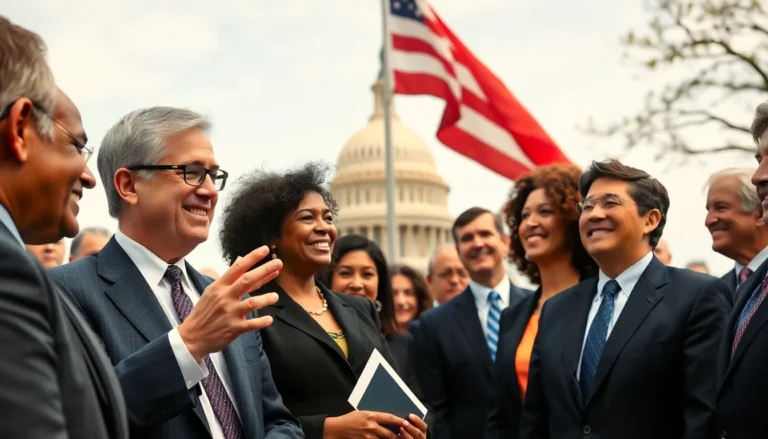
In the vast landscape of American politics, the term “Lincoln Republican” might just sound like the latest hipster coffee blend. But it’s much more than that. This label pays homage to the great Abraham Lincoln, who championed unity and equality during one of the nation’s most tumultuous times. So what does it mean to be a Lincoln Republican today?
Understanding Lincoln Republicans
Lincoln Republicans embrace the legacy of Abraham Lincoln, emphasizing unity and equality in American discourse. This perspective holds significant relevance in today’s political landscape.
Historical Context
In the 19th century, Lincoln led the Republican Party during a time of national division. Civil rights and national unity formed the core of his leadership. The Civil War tested the nation’s commitment to these ideals. Lincoln’s Emancipation Proclamation established a commitment to freeing enslaved people. His efforts laid the foundation for future civil rights advancements. Over time, this historical significance shaped the identity of modern Lincoln Republicans.
Key Principles
Lincoln Republicans prioritize principles of equality, justice, and inclusion. These ideals aim to build bridges across political divides. Fiscal responsibility, combined with social conscience, defines their approach to governance. Commitment to civil liberties remains unwavering in this group. Advocacy for a fair economy and opportunity for all also features prominently. By adhering to these principles, Lincoln Republicans strive to honor Lincoln’s enduring legacy.
Characteristics of a Lincoln Republican

Lincoln Republicans align closely with values rooted in unity and equality, shaped by Abraham Lincoln’s legacy. They focus on creating a cohesive political environment that fosters collaboration across party lines.
Emphasis on Unity
Unity remains a paramount characteristic of Lincoln Republicans. They advocate for dialogue and cooperation among diverse groups, emphasizing that collaboration leads to stronger communities. A reluctance to engage in partisan bickering defines their approach. Constructive conversations replace divisiveness in their political strategy. Lincoln Republicans believe that understanding differing viewpoints enhances democracy. By prioritizing unity, they aim to address societal challenges through collective solutions.
Commitment to Civil Rights
Civil rights form the foundation of Lincoln Republican ideology. They endorse policies that safeguard individual liberties and champion equal treatment for all citizens. Advocacy for marginalized groups exemplifies their dedication. By supporting legislation that promotes social justice, they strive to uplift underrepresented communities. A strong connection exists between their principles and Lincoln’s Emancipation Proclamation. Lincoln Republicans view the advancement of civil rights as a continuing mission. Their commitment to inclusivity drives proactive engagement in political processes, ensuring voices from all backgrounds contribute to the democratic dialogue.
Modern Relevance of Lincoln Republicans
Lincoln Republicans remain significant in contemporary politics, advocating principles rooted in unity and equality. These ideals resonate strongly with today’s societal challenges, emphasizing collaboration and social justice.
Influence on Today’s Politics
Lincoln Republicans significantly impact modern political discourse. Their principles inspire efforts to counter polarization and foster bipartisanship. By promoting equality and civil rights, they create inclusive policies that appeal to a diverse electorate. Lincoln’s legacy serves as a guiding framework for these individuals, reminding political leaders of the importance of justice and fairness in governance. Recent initiatives speak volumes about their commitment to bridge social divides and address systemic inequalities. The focus on fiscal prudence coupled with social responsibility parallels current debates on government spending and welfare programs.
Key Figures and Advocates
Several key figures advocate for Lincoln Republican values today. Leaders such as former Ohio Governor John Kasich and former New Jersey Governor Chris Christie exemplify this approach, emphasizing unity and pragmatism over partisan strife. Prominent organizations, including the Lincoln Project, actively promote these principles, showcasing a commitment to safeguarding democracy. Scholars and activists also contribute by reinforcing the importance of Lincoln’s vision in their work. Their collective efforts represent a shift towards a more inclusive and equitable political environment, shedding light on how Lincoln’s ideals continue to shape political landscapes.
Criticisms and Challenges
Lincoln Republicans face several criticisms and challenges in their pursuit of unity and equality. Dissent within the party often arises due to varying interpretations of what it means to embody Lincoln’s principles today.
Internal Party Conflict
Conflicts emerge as factions within the Republican Party hold differing views on civil rights and social policies. Some party members prioritize conservative values that clash with the inclusive stance that Lincoln Republicans advocate. As a result, debates over issues like immigration reform and healthcare create rifts. Tensions can lead to diminished support for candidates who embody Lincoln’s legacy. These internal struggles challenge Lincoln Republicans’ ability to present a unified front that resonates with a broader electorate.
Perceptions Among Voters
Voter perceptions significantly influence Lincoln Republicans’ effectiveness. Some view them as out of touch with the core base, interpreting their emphasis on bipartisanship as weakness. Additionally, media narratives often frame them as moderates, which can alienate more conservative voters. Skepticism arises as the electorate questions their commitment to traditional Republican values while navigating modern challenges. A strong perception of indecisiveness may hinder their ability to attract supporters. Hence, fostering a clear and consistent identity becomes crucial for Lincoln Republicans moving forward.
The Lincoln Republican identity remains a vital force in today’s political arena. By championing unity and equality, they strive to honor Abraham Lincoln’s legacy while addressing contemporary challenges. Their commitment to civil rights and inclusive policies not only reflects a dedication to social justice but also aims to bridge the growing divides within the political landscape.
As they navigate internal conflicts and external perceptions, Lincoln Republicans continue to advocate for constructive dialogue and cooperation across party lines. This approach not only enriches democratic discourse but also fosters a more equitable society. Ultimately, their efforts signify a crucial step toward a political environment where diverse voices are valued and heard, ensuring that Lincoln’s ideals resonate for generations to come.